

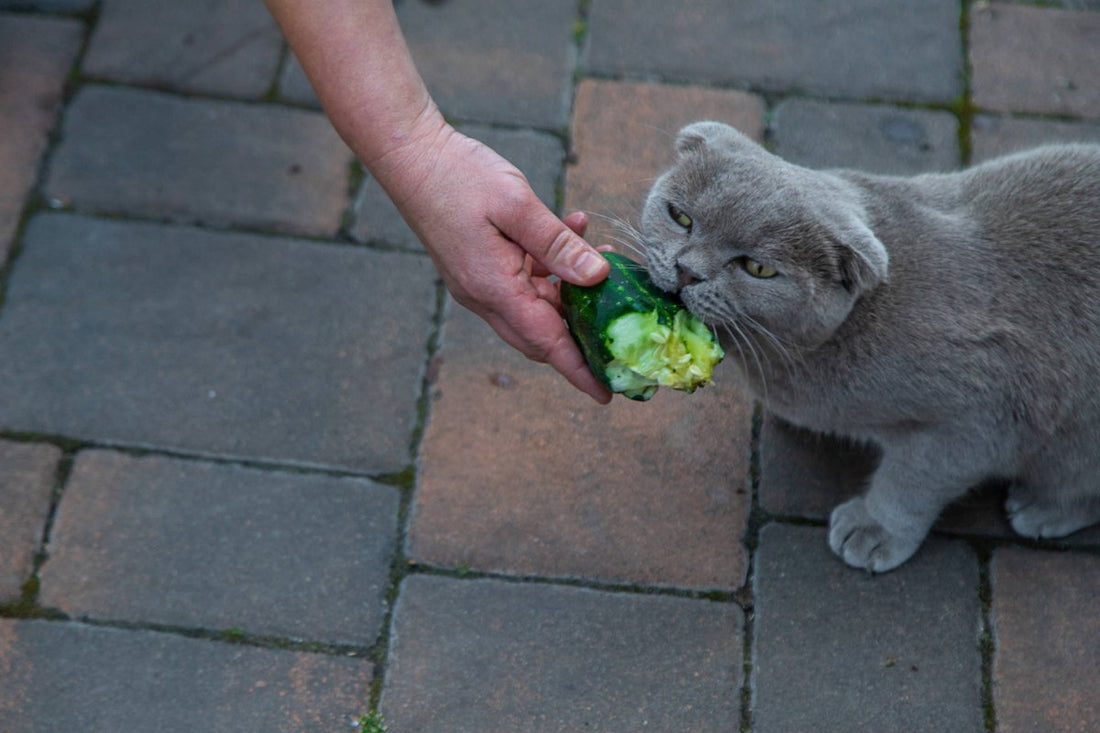
Cucumber for cats: Healthy refreshment or unnecessary gimmick?
When it comes to feeding our feline friends, the question often arises: Can cats eat vegetables? Cucumbers aren't just a light snack for us humans, but are also popular with many animals. But what about cats? Can cats eat cucumbers? The answer is yes, but only under certain conditions. In this blog, you'll learn everything you need to know about cucumbers for cats – from the health benefits and potential risks to the correct preparation.
Can cats eat cucumber? The short answer
Yes, cats can eat cucumber as long as it's fed in small amounts and prepared correctly. Cucumbers are low in calories, high in water, and contain no harmful substances. However, they should only be offered occasionally and in small portions.
What is allowed?
- Fresh, peeled cucumber in small pieces.
What is forbidden?
- Bitter cucumbers or cucumber peels that may contain pesticides.
The benefits of cucumber for cats
Cucumbers are not only low in calories but also rich in valuable nutrients that can be good for your cat. Here are the main benefits:
1. High water content
- Cucumbers are 96% water and are therefore ideal to help your cat stay hydrated, especially on hot days.
2. Low in calories
- For cats that need to watch their weight, cucumber is a perfect snack, as it contains hardly any calories.
3. Vitamins and minerals
- Vitamin K: Supports blood clotting and bone health.
- Vitamin C: Strengthens the immune system and has an antioxidant effect.
- Potassium: Promotes muscle function and fluid balance.
4. Dietary fiber
- They support digestion and promote a healthy gut flora.
For digestion, supportive supplements such as brewer's yeast tablets are also recommended - ideal if your pet is new to vegetables like cucumber.
5. Teeth cleaning
- Chewing on pieces of cucumber can help clean your cat's teeth and prevent tartar buildup.
How much cucumber can cats eat?
The right amount is crucial to ensure that cucumber is beneficial for your cat and not harmful. Too much cucumber can cause digestive problems.
Recommended quantity:
- Small cats: One thin slice of cucumber (approx. 1–2 cm) per week.
- Medium-sized cats: 2–3 slices per week.
- Large cats: Up to 5 small slices per week.
In addition to vegetables like cucumber, a high-quality linseed oil like our linseed oil for cats can also offer added value: rich in Omega-3, it holistically supports fur, skin, digestion and overall well-being.
Risks and precautions when eating cucumbers
Although cucumbers are healthy, there are some risks you should be aware of:
1. Bitter substances
- Some cucumbers may contain bitter substances that can be unpleasant or harmful to cats.
2. Pesticides
- Cucumber peels can contain pesticides. Therefore, they should always be peeled before eating.
3. Overfeeding
- Too much cucumber can lead to diarrhea or vomiting, as cats cannot tolerate large amounts of raw vegetables.
4. Allergies
- Although rare, some cats can be allergic to cucumber. Watch for symptoms such as itching, vomiting, or diarrhea.
How do you feed your cat cucumber correctly?
Proper preparation is crucial to ensure cucumber is safe and digestible for your cat. Here are some tips:
1. Wash and peel the cucumber
- Remove the peel to avoid pesticide residues.
2. Cut into small pieces
- Cut the cucumber into bite-sized pieces or thin slices so that your cat can easily eat it.
3. Serve fresh
- Make sure the cucumber is fresh. Old or mushy cucumbers should not be fed to the animals.
4. Offer in small quantities
- Start with a small portion to ensure your cat tolerates the cucumber well.
5. No spices or additives
- Always serve the cucumber plain, without salt, vinegar or other additives.
Creative ways to prepare cucumber for cats
Cucumber doesn't have to be served in a boring way. Here are some ideas on how to make it more appealing to your cat:
1. Cucumber slices as a snack
- Cut the cucumber into small slices and serve it plain.
2. Cucumber cubes in wet food
- Mix small cubes of cucumber into the wet food to liven it up.
3. Cucumber water
- Soak some cucumber slices in water and serve it to your cat as a refreshing drink.
4. Cucumber ice cubes
- Freeze small pieces of cucumber in water – ideal for hot summer days.
When should you not give your cat cucumber?
In some cases, cucumber is unsuitable for cats:
1. Digestive problems
- Cats with sensitive stomachs may react to cucumber with diarrhea or bloating.
2. Allergies
- If your cat is allergic to cucumber, she shouldn't have any more.
3. Bitter cucumbers
- Avoid cucumbers with a bitter taste, as they are unpleasant for cats.
Frequently asked questions about cucumbers for cats
"Can cats eat cucumbers?"
Yes, but only in small quantities and well prepared.
"Is cucumber poisonous for cats?"
No, cucumbers are not poisonous as long as they are fresh and peel-free.
"Can cucumbers give cats diarrhea?"
Yes, eating too much cucumber can lead to digestive problems.
"What are some alternatives to cucumber?"
Zucchini or carrots (steamed) are also suitable vegetables for cats.
Conclusion: Cucumber for cats – Refreshing, but not for every day
Cucumber can be a healthy and refreshing addition to your cat's diet when fed in small quantities and prepared correctly. Here's a summary of the key points:
- Sure: Fresh, peeled cucumber in small pieces.
- Advantages: High water content, low in calories and rich in nutrients.
- Caution: Avoid bitter substances, pesticides, and overfeeding.
With these tips, you can safely and confidently offer your cat cucumber. It's not only healthy, but also a refreshing summer treat that your feline friend will love!
If you really want to do something good for your cat, opt for beneficial supplements like our green-lipped mussel powder - it naturally supports joints and mobility.


